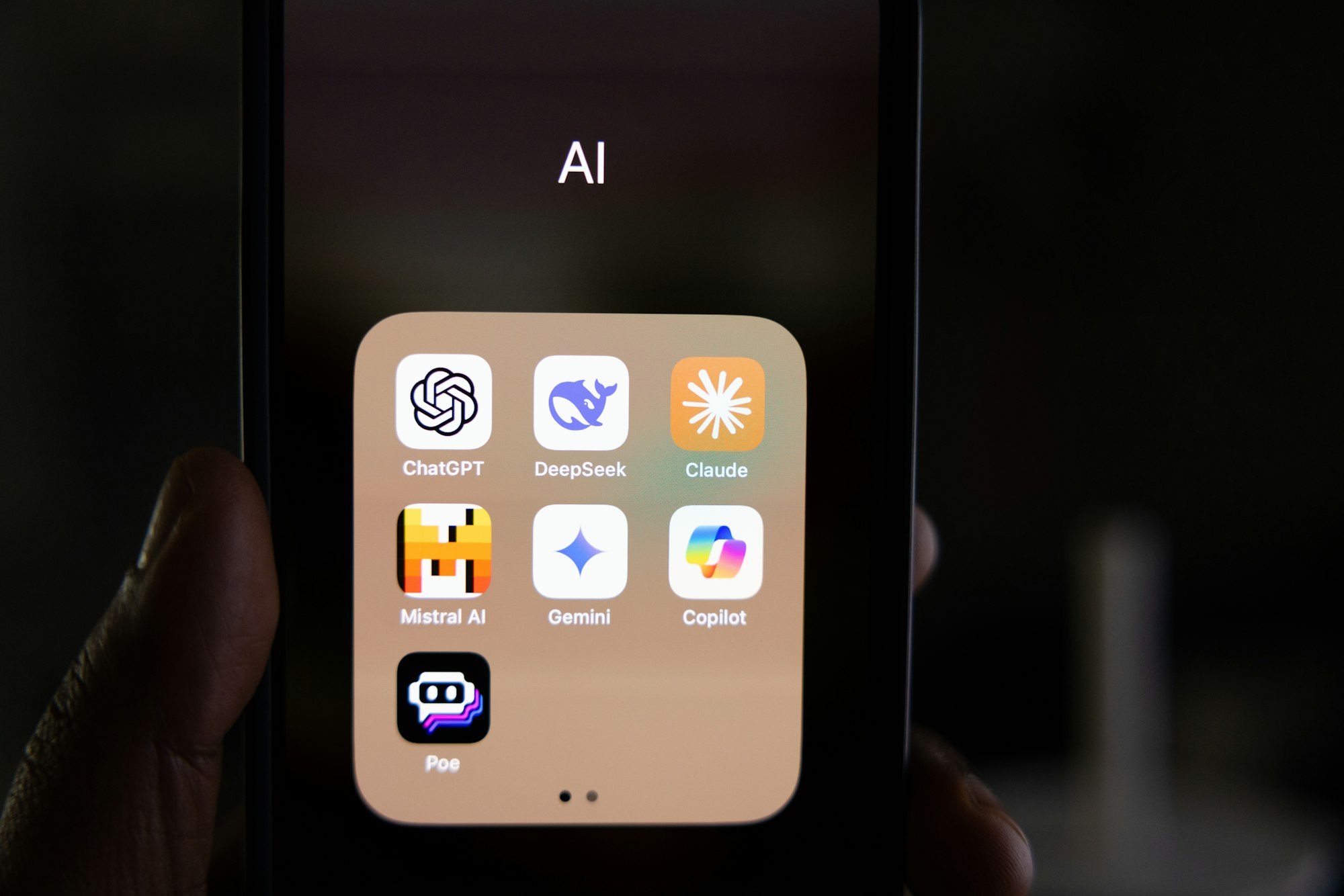

Today, with some free time, I sat down to look into the US-China business arena. The fight seems to have moved to another battlefield, continuing the previous conflict, but now it is no longer purely about embargoes; it has shifted to a battlefield called AI. And the one who opened that battlefield is called DeepSeek.
A short and humorous explanation of DeepSeek
DeepSeek (R1) is essentially a "distilled" language model. When you train a giant AI model, it can have hundreds of billions or even trillions of parameters, consume enormous amounts of data, and need an entire GPU data center just to run. But sometimes you don't need all that power to handle ordinary tasks, and that is where "distillation" comes in.
You take a large model like GPT-4 (or DeepSeek's monster 671-billion-parameter version) and use it to "teach" smaller models. It works like a master craftsman passing on his trade to an apprentice: the apprentice doesn't need to master everything, just be good enough to do the job well. It is like teaching by "eavesdropping": you have a large model that knows everything about astrophysics, Shakespeare, and Python programming. By carefully choosing examples and repeating the training process, you can teach the small model to produce similar answers without having to hold the entire enormous body of information inside it. It is like copying the solution, without carrying the whole library along.
What are the implications?
Lower cost and lower barriers to AI: The 32-billion-parameter version can run well on a MacBook Pro, and smaller versions can run on an Orin Nano costing about 249 dollars.
Democratizing access to AI: DeepSeek R1 was released as open source, allowing businesses and governments worldwide to build on this model without worrying about licenses or restrictions from American companies.
How much did DeepSeek really cost?
Some say DeepSeek cost only 6 million dollars, but SemiAnalysis believes the real figure is 1.3 billion dollars. Most of this money went into building and maintaining a "cloud kitchen" with tens of thousands of Nvidia GPUs. Instead of using only the "fancy H100 kitchen," they also made use of the H800 and H20. Despite the huge cost, DeepSeek still scores points thanks to its MLA technology, which saves up to 93.3% of the effort.
The impact of DeepSeek R1 on US Big Tech stocks
The market shows that the monopoly of American Big Tech no longer holds. Companies like Nvidia will be affected first, because DeepSeek doesn't need Nvidia's latest chips. Companies that were expected to earn a lot from charging for AI will also be affected. The growth parameters in Big Tech valuation models will have to be readjusted.
Why do American companies open-source AI?
Some argue that AI may need to be a national defense secret, but this isn't easy because AI isn't developed only by the US. European countries support the idea of open AI, and if China and European startups cooperate, the US will be in trouble.
A retired Microsoft engineer explains DeepSeek R1
DeepSeek R1 is seen as a shocking milestone in the tech world, like a "Sputnik moment." Previously, many people believed the AI race was firmly in the hands of big companies like OpenAI, but DeepSeek R1 exceeded the highest expectations.
How does DeepSeek R1 work?
DeepSeek R1 is a "distilled" language model, trained at a smaller scale but still able to answer questions, generate text, and grasp context. DeepSeek used large AI models such as GPT-4 or Meta LLaMA as a "scaffold" to create something even bigger. The model focuses on imitating the output of the large model across many types of questions and situations. DeepSeek doesn't rely on just one large model but uses many different AIs to create diverse perspectives during training.
Why does DeepSeek R1 matter?
Lowers the barrier to AI: No need for huge infrastructure; it can run on smaller systems.
Can run on personal devices: The 32-billion-parameter version runs well on a MacBook Pro, and smaller versions can run on an Orin Nano.
Things to keep in mind about DeepSeek R1:
Prone to "hallucination": Small models can give wrong answers.
Hard to cover broad knowledge: It cannot cover as wide a range of knowledge as large models.
Dependent on the "teacher": Quality depends on the training data from large models.
Does not compete directly on advanced capability: It focuses on cost and wide accessibility.
DeepSeek R1 paves the way for a more "democratized" AI landscape, where high-end technology is not confined to the hands of a few giants.
Impact on American AI
DeepSeek R1 lets developers around the world create at lower cost, which may erode the competitive advantage of proprietary models. American companies that rely on revenue from subscriptions or API offerings will face increased competitive pressure. DeepSeek R1 "democratizes" access to AI, which may reduce demand for American-developed models. Companies that depend on selling AI technology licenses may be affected.
There is a hypothesis that China may be trying to stir up volatility in the American market by appearing to make AI "dirt cheap" when in fact it has been pumped full of money.
In short: DeepSeek R1 is a compact but powerful AI model, built to bring AI technology closer to more people.
The trade war and its impact on the ASEAN region
Mr. Trump will impose a 25% tariff on Canada and Mexico, and 10% on China. This may benefit ASEAN in general, and Vietnam in particular.
Manufacturing is shifting from China to Southeast Asia, with Vietnam, Thailand, Malaysia, and Indonesia becoming important nodes in the global supply chain. The US-China trade war plays an important role in this shift. Chinese companies are investing in manufacturing facilities in Vietnam, Mexico, and elsewhere to reduce the impact of tariffs.
Industries such as electronics, automobiles, and photovoltaic lithium batteries are leading the shift to Southeast Asia. Industries such as pharmaceuticals, semiconductors, home appliances, and food production are shifting more slowly. Some photovoltaic companies have been slow to invest in Vietnam, Thailand, Cambodia, and Malaysia and are moving to Indonesia, Laos, or South Asian countries.
The US will probably turn to China and the EU after finishing with Canada and Mexico, while this year ASEAN will still benefit.
The opening of 2025 is a never-ending fight, and it is happening on our S-shaped land. What does Vietnam need to do to survive? And what will you do to survive in that fight?
Reference source: https://hoquoctuan.substack.com/p/oc-cham-01022025-giai-thich-ngan